
I Repeat Myself by Natalia Shafa
***** The Sins of the Father
6/1/20262 min read
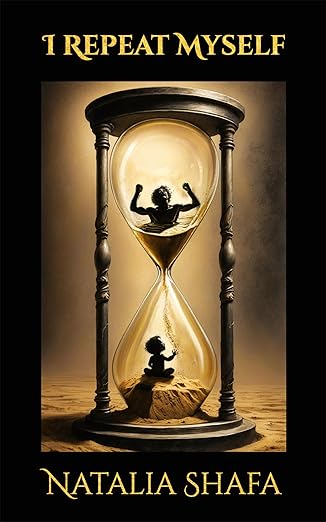

I Repeat Myself is the kind of book that moves fast enough to keep you reading but lands heavy enough to stay with you. Its premise is genuinely original: when a small number of humans inexplicably begin to reproduce asexually, giving birth to their own exact replicas - a phenomenon the novel calls human apomixis - the question it raises is not really a scientific one. It is asking something older and harder: is the damage our parents do to us something we are destined to pass on, or is there always a door marked choice somewhere in the corridor?
Ambrose Flint is the first known case. He is also a paedophile, which means the child who arrives as his mirror image - Junior - inherits not just his face but the worst possible father. HARP, the organisation tasked with managing the apomixis cases, brings Ambrose to a facility called Renatus, intending to keep him there for eighteen years, the length of a childhood. The novel understands the bitter irony in that: containment as a substitute for parenting. Ambrose, absorbed in virtual reality and indifferent to the son who is also himself, makes Renatus feel less like protection and more like a waiting room for damage already done.
Junior's child is Ari. What happens between them is part of what Jade - the fourth generation - is trying to piece together when the novel begins. Jade has grown up in an orphanage in a world where Renatus has been abandoned and apomixis cases are no longer exceptional enough to warrant a secret facility. He knows he carries the Flint name. He does not know much else. His search for Ari, and through Ari back to the beginning, is what drives the novel's second half, and it is where the emotional weight lands hardest. The question is not just why his father left. It is whether understanding that abandonment can break the pattern or only repeat it.
Four generations, four distinct personalities built from the same source material. The novel earns that structural ambition by making each of them genuinely their own person. You find yourself invested in Junior and Ari even as the story belongs to Jade, which is no small achievement. The novel does not sanitise the complexity of parent-child love. It holds the space where a parent can be the only thing you have and the source of your deepest damage, without resolving that tension cheaply. The flashes of humour in the characters' inner lives are well-placed and stop the darker material from becoming relentless.
It sits comfortably in the tradition of speculative fiction that uses science fiction scaffolding to get at something deeply human - writers like Margaret Atwood come to mind - though this novel has its own distinct voice and concerns. The worldbuilding around fertility, virtual reality, and the ethics that surround both felt grounded and considered, never ornamental. By the final pages there is something that resembles hope, though the novel is too honest to call it resolution. Whether generational trauma embedded this deeply can ever truly be erased is a question the book earns the right to leave open.
Recommended for readers who like their speculative fiction with real psychological weight.
Read and Reviewed
Honest reviews for independent novelists.
Submissions
submissions@readandreviewed.com
Read and Reviewed is supported by Indies Today
© 2026 Read and Reviewed-Independent editorial reviews for self-published novelists.
Undivided reading time